
The classic brew, reconsidered 5 standouts reviewed
Best Coffee Percolators
Electric ease or stovetop ritual? We compare the machines that make a bold, piping-hot pot without hiding how the brew works.
Compare the five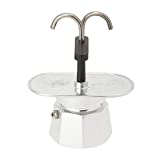
- 01 Water heats
- 02 Water rises
- 03 Coffee circulates
At a glance
Five ways to perk.
Start with heat source and batch size. Those two choices narrow the field faster than any feature list.
| Model | Score | Type | Capacity | Material | Price |
|---|---|---|---|---|---|
| Presto 02811Best overall | 9.6/10 | Electric | 2–12 cups | Stainless steel | $64.99 |
| FCP412Best large electric | 9.3/10 | Electric | 4–12 cups | Stainless steel | $79.99 |
| FCP240Best compact electric | 9.1/10 | Electric | 2–4 cups | Stainless steel | $59.99 |
| YosemiteBest stovetop | 8.9/10 | Stovetop | 8 cups | Stainless steel | $39.99 |
| Mini ExpressBest for two cups | 8.7/10 | Stovetop | 2 cups | Aluminum | $44.99 |
Percolators brew by repeatedly sending hot water up a central tube and over a basket of grounds. The result is unapologetically hot, aromatic, and full-bodied.
Why choose a percolator?
The method is visible and easy to understand. There are few fragile parts, permanent baskets remove the need for paper filters, and larger electric pots can serve a table quickly.
That circulation is also why technique matters. Leave the pot at a rolling perk for too long and already-brewed coffee passes through the grounds again, pulling bitterness with it.
The best cup comes from a gentle perk—not a furious boil.
Use fresh coarse grounds, begin with cold water, and stop the cycle when the color and aroma reach the intensity you want.
Our shortlist
Best percolator reviews.
Five distinct brewers for full pots, compact kitchens, the stovetop, and the morning table.
Best overall
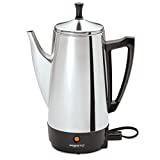
Presto 02811 12-Cup Stainless Steel
Fast, straightforward, and built almost entirely from stainless steel, the Presto 02811 is the strongest all-round choice for households that want classic percolated coffee without stovetop monitoring.
The signal light tells you when coffee is ready, while the detachable cord makes table service less awkward. It brews anywhere from two to twelve cups at roughly one cup per minute.
A removable filter basket and perk tube simplify cleanup. The exterior becomes hot during use, so the cool-touch handle and lid knob matter more than they might on an ordinary drip brewer.
Check on AmazonReasons to buy
- Quick one-cup-per-minute brewing
- Durable stainless-steel body
- Ready-to-serve indicator light
- Detachable cord for serving
Keep in mind
- Exterior becomes very hot
- No automatic shutoff
Best large electric
Farberware FCP412 12-Cup Percolator
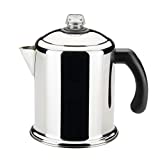
The full-size FCP412 is made for family breakfasts and after-dinner coffee, combining a generous capacity with an automatic keep-warm mode.
The machine maintains serving temperature after the brewing cycle, and its rolled edges make the pot easier to handle and clean. A tight-fitting lid helps control spills.
Brewing remains simple—water, grounds, heat—but the fixed power cord is less graceful at the table than a detachable design.
Check on AmazonReasons to buy
- Large 12-cup capacity
- Automatic keep-warm function
- Strong stainless-steel construction
- Cool-touch handle and lid knob
Keep in mind
- Cord is not detachable
- Minimum four-cup batch
Best compact electric
Farberware FCP240 2–4 Cup Percolator
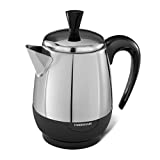
For one or two coffee drinkers, the compact FCP240 avoids the footprint and waste of a full-size percolator while retaining automatic warming.
It can finish a small batch quickly and keep it warm without a separate hot plate. The permanent basket means there are no paper filters to replace.
Its narrow body is easy to store, but the limited capacity makes it a specialist rather than a party brewer.
Check on AmazonReasons to buy
- Excellent for one or two people
- Compact countertop footprint
- Automatic keep-warm mode
- Reusable filter basket
Keep in mind
- Only four-cup maximum
- Power cord stays attached
Best stovetop
Farberware Classic Yosemite 8-Cup
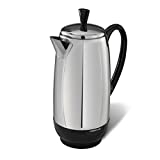
The Yosemite strips the method back to its essentials: a polished stainless-steel pot, permanent basket, clear glass knob, and no electrical parts to fail.
Watch the color through the lid knob, reduce the heat when circulation begins, and stop extraction when the coffee reaches the strength you prefer.
It is fully immersible and dishwasher safe. The trade-off is attention: unlike an electric model, it will not regulate temperature or stop the cycle for you.
Check on AmazonReasons to buy
- Works without electricity
- Dishwasher-safe construction
- No disposable filters needed
- Excellent long-term value
Keep in mind
- Requires active heat control
- Handle can warm during long cycles
Best for two cups
Bialetti Mini Express 2-Cup
Bialetti’s theatrical Mini Express sends coffee through two spouts directly into cups, turning a compact stovetop ritual into part of the presentation.
It produces a concentrated moka-style drink rather than the larger, lighter cup of an electric percolator. Aluminum heats quickly and keeps the brewer light.
Use low to medium heat and remove it as soon as the flow turns pale. Hand washing protects the finish and seasoned interior.
Check on AmazonReasons to buy
- Brews directly into two cups
- Compact and visually distinctive
- Fast stovetop preparation
- Easy to pack and store
Keep in mind
- Hand wash only
- Not induction-compatible without an adapter
The perk cycle
How a coffee percolator works.
Heat turns a simple pot into a continuous brewing loop. Control that loop and the method becomes far more precise than its old-fashioned reputation suggests.
- 01
Heat the water
Water in the lower chamber warms. Bubbles form beneath the vertical pump tube.
- 02
Lift it upward
Expanding bubbles push hot water up the central tube to the spreader above the basket.
- 03
Wet the grounds
Water falls across coarse coffee, extracts flavor, and drains back into the pot.
- 04
Stop at strength
The cycle repeats until you lower the heat or the electric brewer switches to warming mode.
Better brewing
A bold cup, not a bitter one.
Start with cold filtered water and a coarse, even grind. Assemble the basket and tube before heating.
When perking begins, reduce stovetop heat. A slow, regular pulse extracts more cleanly than aggressive boiling.
Remove the basket after brewing if practical, then serve promptly. Long warming periods flatten aroma and intensify bitterness.
Fast answers
Percolator FAQ.
Does a percolator make better coffee?
It makes a different cup: hotter, fuller, and often stronger than filtered drip coffee. Whether that is better depends on your taste and heat control.
What grind is best for a percolator?
Use a coarse grind. Fine grounds can pass through the basket and also over-extract during repeated circulation.
Can you use regular ground coffee?
You can, but standard pre-ground coffee is often finer than ideal. Use a paper basket filter if sediment becomes a problem.
How do you know when percolator coffee is done?
Electric machines usually show a ready light or move to keep-warm mode. On the stove, watch the glass knob and stop after several minutes of gentle, regular perking.
How often should a percolator be cleaned?
Rinse the basket, tube, lid, and pot after every use. Periodically remove mineral scale according to the manufacturer’s instructions.
Final verdict
Let the method show.
The Presto 02811 is our best all-round choice: fast, capacious, and simple to serve. Choose the FCP240 for small batches or the Yosemite when you prefer direct stovetop control.
Whichever pot you choose, coarse coffee and a gentle cycle matter more than chasing maximum brew time.